

A SaaS product designer can help when your SaaS product works, but the experience does not. The features work, yet users still get lost during onboarding, ask support where settings are, or avoid useful features because the workflow feels confusing.
At that point, changing colors or polishing buttons will not fix the real problem.
A SaaS product designer connects user needs, business goals, product requirements, and technical limits. They help the team decide what to build, how it should work, and how the experience can stay clear as the product grows.
I’m Shakil, a SaaS-focused UI/UX designer. In my work on web applications, mobile products, and design systems, I often see the same misunderstanding: product design is treated as the final visual step. In practice, useful design starts much earlier.
This guide explains what a SaaS product designer does, what deliverables to expect, when to hire one, and how to choose the right person for your product.
SaaS product designer: what the role means
If you are asking what is a SaaS product designer, the short answer is this: a SaaS product designer shapes the complete experience of a subscription-based software product. They study users, define problems, plan flows, create interfaces, test ideas, work with developers, and improve the product after launch.
The role sits between users, business, product management, and engineering. A product designer for SaaS must understand what customers want, what the company needs, and what developers can realistically build. The Interaction Design Foundation defines product design as blending user needs with business goals to create products that succeed over time. The designer works on the system around the screens, not just the screens themselves.
Product designer vs. UX designer vs. UI designer
These titles overlap, but their main focus helps founders choose the right person.
| Role | Main focus | Typical work |
|---|---|---|
| UI designer | How the interface looks | Colors, typography, spacing, components, and visual consistency |
| UX designer | How people understand and use the interface | Research, information architecture, user journeys, flows, and usability testing |
| Product designer | How the complete product solves user and business problems | Product discovery, UX, UI, prototypes, testing, delivery, metrics, and iteration |
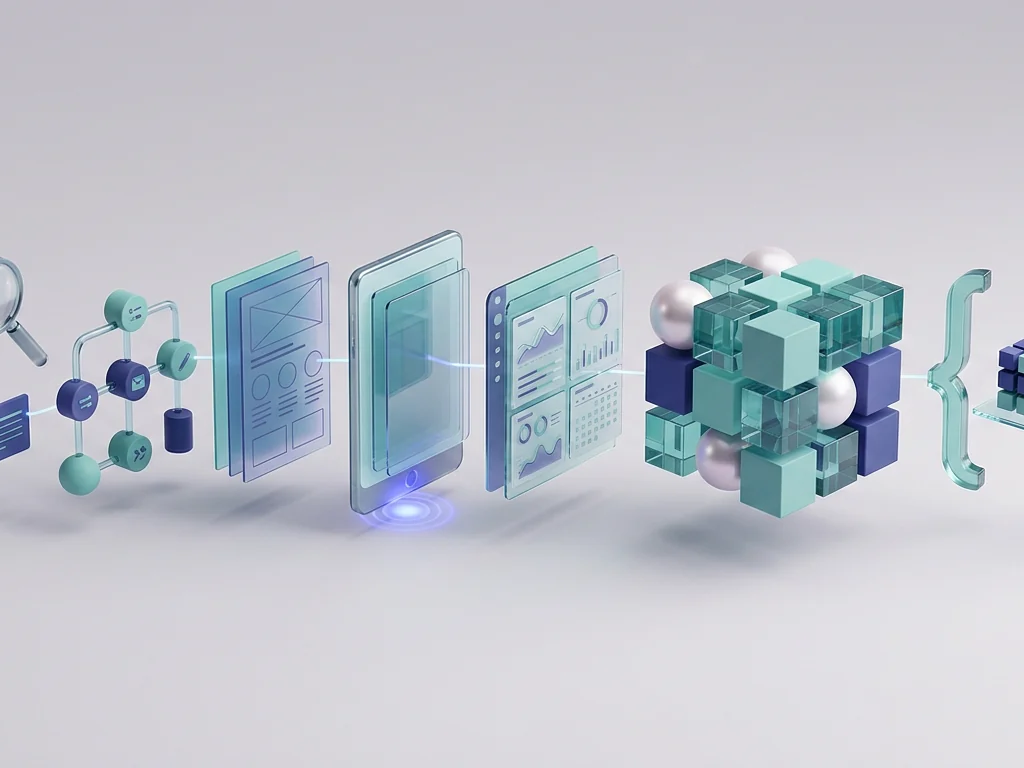
A UI designer may create a clean dashboard. A UX designer may improve its workflow. A product designer asks wider questions: Which information matters to each role? What should users do next? Can the team build it, and how will success be judged? In a startup, one person may cover all three roles. The actual responsibilities matter more than the title.
Why SaaS products need a specialized design approach
A SaaS application may support many users, permissions, workflows, and repeated tasks without becoming difficult to learn.
Users need recurring value
A SaaS customer does not pay only for a good first impression. They keep paying because the product continues helping them complete important work. The experience must remain useful after signup, onboarding, and the first successful task.
That makes recurring workflows important. If a task is slightly confusing but someone performs it every day, the frustration adds up quickly.
Different roles need different levels of control
A B2B product may serve buyers, administrators, managers, operators, and new team members. An admin may need detailed settings, while a new user needs sensible defaults and a clear next step.
A B2B SaaS product designer must decide what each role sees, what they can change, and how to provide advanced control without overwhelming everyone else.
Onboarding affects whether users reach value
A signup is not the same as successful adoption. Users need to understand what the product does and complete a meaningful task. The onboarding flow, empty states, sample data, checklists, and contextual guidance can all help.
SaaS products change continuously
New features can create clutter when each release adds another button, pattern, or navigation item. Product designers protect consistency by reusing established patterns and deciding where new behavior belongs.
This is why design systems matter. They give designers and developers shared components, states, and rules, making it easier to grow without rebuilding every screen from scratch.
What does a SaaS product designer actually do?
A typical SaaS product designer job description may mention research, wireframes, prototypes, and UI design. The real work is more connected than that list suggests.
Product discovery and requirement analysis
The designer begins by understanding the product, not by opening Figma. They review the business model, product goals, user groups, technical limits, and current evidence.
The initial request may only be a symptom. “Redesign the dashboard” could mean users cannot find important data. “Improve onboarding” could mean the team has not defined the first successful outcome.
User research
Research can include interviews, surveys, support tickets, session recordings, product analytics, and conversations with customer-facing teams. The right method depends on the question and available resources.
The goal is to replace assumptions with evidence. A range of UX research methods explains how different research methods answer different questions.
Information architecture and user flows
The designer organizes features, content, navigation, and tasks into a structure users can understand. They map how each role moves from one step to the next and identify unnecessary decisions or dead ends.
This work matters in complex SaaS tools because a clear screen cannot rescue a broken workflow.
Wireframes and prototypes
Wireframes help teams discuss structure before visual details make the design feel final. Prototypes allow users and stakeholders to interact with an idea before development begins.
Wireframes as lean layouts used to plan structure, function, and flow. Testing early makes it easier to change the basic approach while changes are still affordable.
Interface design
Once the structure works, the designer creates the final interface. This includes layout, hierarchy, typography, color, components, responsive behavior, and microcopy.
Good UI work also includes states that are often missing from portfolio shots: loading, empty, error, success, disabled, and permission-limited states. These details are where a product starts feeling reliable.
Design systems
As the product grows, the designer may build reusable components, design tokens, interaction patterns, and documentation. A design system reduces inconsistency and gives the team a shared language.
The work must happen with developers. Designers and engineers building a system together show why component states and technical limits should be discussed early.
Testing, handoff, and iteration
A designer may test a prototype, document interactions, prepare build-ready specifications, answer developer questions, and review the implemented interface. After launch, they can study feedback and behavior to improve the feature.
A design that looked sensible in a meeting may change after real users try it.
What deliverables should a founder expect?
Deliverables depend on the product stage and project scope. A focused audit will not produce the same materials as a complete MVP design. Common deliverables include:
- Discovery notes and product requirements
- User-flow maps
- Information architecture
- Low-fidelity wireframes
- Clickable prototypes
- High-fidelity UI screens
- Responsive layouts
- Loading, error, empty, and success states
- UI component library
- Design tokens
- Developer specifications
- Testing findings and recommendations
A useful example is Freno, a web administration product in my portfolio. It brings blog management, e-commerce operations, customers, user roles, and page-building tools into one system. Designing a product like this is not simply about arranging dashboard cards. The work requires clear information groups, connected workflows, consistent controls, and enough flexibility to support several types of tasks.
That mix of product thinking, interface design, and development-ready documentation is also central to my SaaS application design service.
How the role changes across SaaS product stages
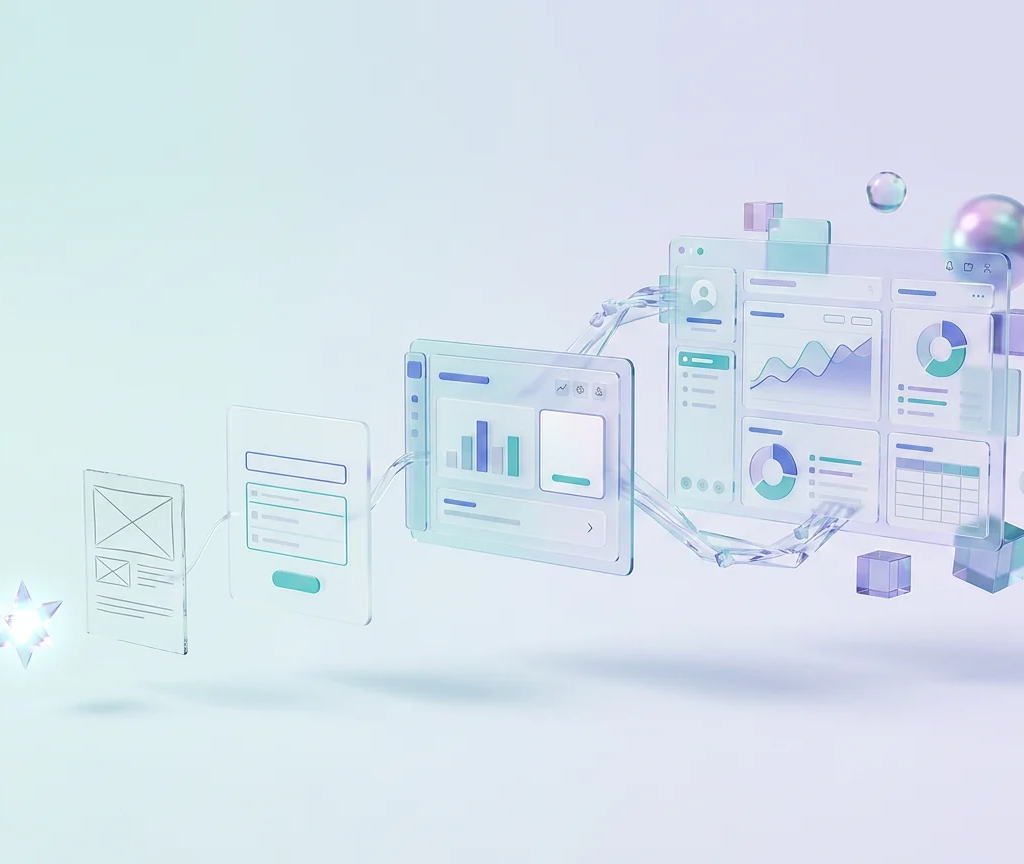
The designer’s value changes as the product moves from an idea to a mature platform.
Idea validation
At the idea stage, the designer helps clarify the user problem, challenge assumptions, and turn a rough concept into testable flows. The goal is not to design every possible feature. It is to find out whether the core idea makes sense.
MVP planning
For an MVP, the designer helps prioritize essential workflows and remove features that do not support the first useful outcome. Wireframes and prototypes allow the team to test structure before spending heavily on development.
Product launch
Near launch, attention shifts toward complete flows, responsive screens, interface states, onboarding, accessibility, and handoff. The designer works closely with developers to resolve gaps between the prototype and the built product.
Accessibility should not be treated as a final check. The W3C’s accessibility principles emphasize that interfaces should be perceivable, operable, understandable, and robust.
Growth
As usage grows, the product often gains more features, roles, and edge cases. The designer helps prevent clutter, improves important recurring workflows, and creates a system that allows the team to ship consistently.
Mature product or redesign
A mature product may carry years of design debt. Similar actions behave differently, old features conflict with new ones, and users depend on workflows the team is afraid to change. Here the designer audits the experience, identifies priorities, tests improvements, and plans change without disrupting users unnecessarily.
When should a SaaS startup hire a product designer?
There is no single perfect hiring moment. The better question is whether design problems are already affecting product decisions, development, or user understanding.
| Sign | What it may mean |
|---|---|
| Developers make most interface decisions | The team lacks dedicated ownership of the user experience |
| Product requirements stay unclear | Discovery and workflow planning are missing |
| Users struggle during onboarding | The path to first value needs research and redesign |
| Every feature uses a different pattern | The product needs shared components and rules |
| The team is preparing an MVP | Early validation could prevent avoidable development work |
| Support receives repeated usability questions | The interface is not explaining itself clearly |
| Roles and permissions are growing | Information architecture and access logic need attention |
| A redesign is being discussed | The team needs evidence and priorities, not only a new visual style |
So, when should a SaaS startup hire a dedicated UX designer or product designer? Hire when there is an important user or product problem that needs continuous design ownership. If you are asking when to hire a UX designer, look at the cost of uncertainty: unclear requirements, repeated rework, delayed releases, and users who cannot reach value.
When you may not need a full-time designer yet
Not every startup should make a full-time hire immediately.
If the idea has not been validated, there is little ongoing design work, or the team needs help with one focused workflow, a project-based arrangement may be more sensible. The same applies when the company cannot provide access to users, stakeholder input, or developer support. A designer cannot validate decisions without context or turn approved files into product improvements alone.
In these cases, an independent designer, short discovery project, or focused UX audit may offer enough support without a long-term commitment.
How to evaluate a SaaS product designer
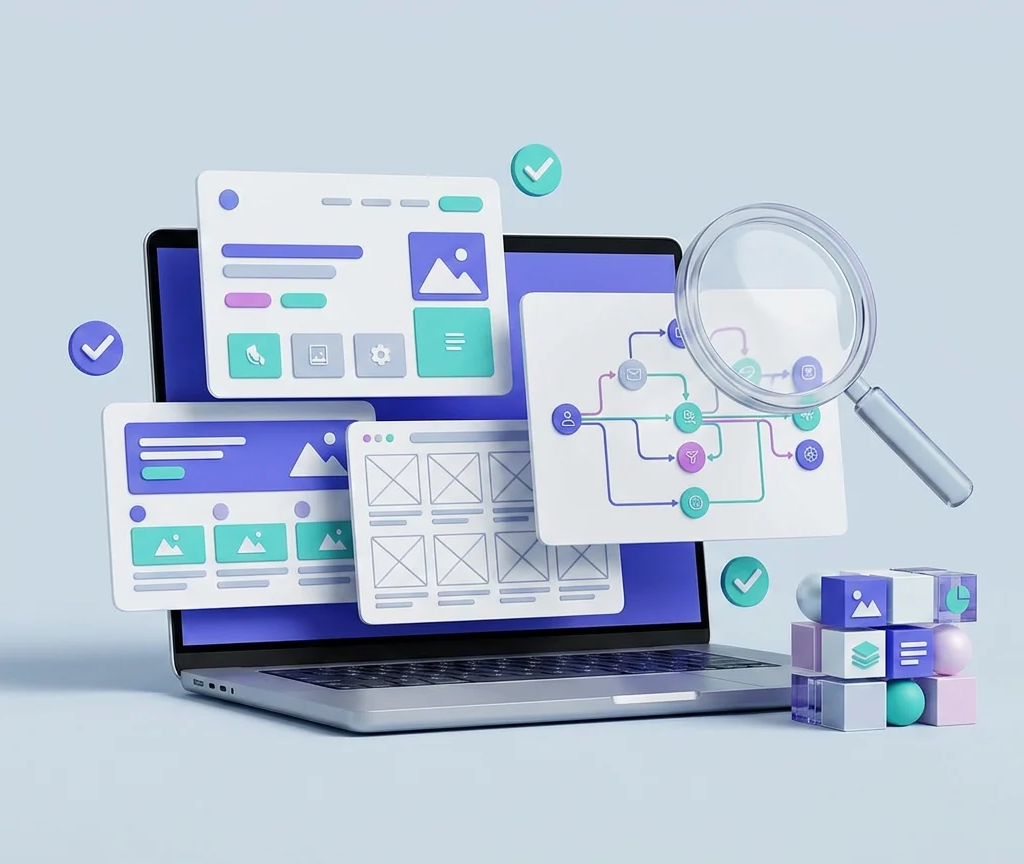
When founders try to hire a UX designer for SaaS, attractive screens are easy to notice. They are not enough to judge product-design ability.
Review the complete case study
A strong SaaS product designer portfolio should explain:
- The original problem
- The users and business context
- Important constraints
- Research or evidence used
- Options considered
- Why decisions were made
- How the design changed
- What happened after delivery
A polished screen without this context shows visual skill, but not necessarily product thinking.
Look for relevant complexity
The designer does not need your exact industry experience. Look for similar problems: dashboards, permissions, onboarding, data-heavy screens, recurring workflows, or design systems.
Ask how decisions were validated
Useful questions include:
- What evidence changed your first idea?
- How did you decide what not to build?
- What did users find confusing?
- How did technical limits affect the solution?
- What happened when you disagreed with a stakeholder?
- What would you improve if you returned to the project?
Check developer collaboration
Ask what the designer includes in handoff, how they explain interaction states, and whether they review implementation. Product design loses value when the final build does not match the intended behavior.
Evaluate communication and honesty
The right designer should explain decisions in plain language, accept useful feedback, and say when evidence is missing. Be cautious when every project story sounds perfect. Real design work involves constraints, trade-offs, and ideas that did not work.
Freelance, in-house, agency, or independent partner?
The right setup depends on scope, budget, speed, and workload.
| Option | Best suited for | Common limitation |
|---|---|---|
| Freelance designer | Focused projects and flexible support | Availability and depth can vary |
| In-house designer | Continuous daily product work | Recruitment and long-term commitment |
| Design agency | Broad scope requiring several specialists | Higher overhead and less direct communication |
| Independent product-design partner | Direct senior support with flexible involvement | Less capacity than a large agency |
None is automatically best. A startup planning one MVP may need focused senior support. A growing SaaS company shipping features every week may benefit from an in-house designer. A large redesign involving research, branding, and development may require a broader team.
How to work effectively with a product designer
Give the designer context, not just a list of screens. Share the business goal, product constraints, user feedback, existing data, and technical reality. Include developers early and make decision-makers available when important questions arise.
Feedback also matters. “I don’t like it” gives the designer little direction. Explain what feels unclear, which requirement may be missing, or what user behavior concerns you.
The best relationship treats the designer as a product partner. They should be expected to question the brief when evidence points toward a better problem.
How AI is changing the role
An AI SaaS product designer can use AI to organize research notes, explore layout ideas, draft microcopy, and create quick prototypes. This can reduce production time, but it does not remove the need for product judgment.
AI can generate five dashboard options, but it cannot know which supports a real workflow without context and testing. Designers also handle uncertain outputs, confidence indicators, review states, corrections, and human approval.
The role is moving away from pure screen production and toward systems thinking, evaluation, and decision-making.
Frequently asked questions
What does a SaaS product designer do?
A SaaS product designer researches users, defines product problems, plans workflows, creates interfaces and prototypes, tests ideas, supports developers, and improves the product after launch.
Is a SaaS product designer the same as a UX designer?
The roles overlap. A UX designer focuses mainly on research, usability, and interaction. A product designer usually covers those areas while also considering business goals, product strategy, delivery, and the full product lifecycle.
When should a SaaS startup hire a product designer?
Hire when unclear requirements, inconsistent features, onboarding problems, developer-led design decisions, or product growth require regular design ownership.
What should a SaaS product-design portfolio include?
It should show the problem, users, constraints, process, decisions, iterations, final interface, and honest outcomes or lessons. Finished screens alone are not enough.
Does a B2B SaaS company need a specialized designer?
Specialized SaaS experience is valuable when the product includes complex workflows, permissions, dashboards, integrations, onboarding, or recurring tasks. Relevant problem-solving experience matters more than the job title alone.
How do I find and hire a UX designer for my SaaS product?
Start with relevant SaaS case studies, referrals, professional networks, and trusted portfolio platforms. If you search hire UX designer SaaS, look beyond visual quality and review the designer’s process, decisions, communication, and developer collaboration.
How is AI changing SaaS product design?
AI speeds up parts of research, ideation, copy, and prototyping. Designers still need to choose the right problem, provide context, test ideas, and make sure AI-driven experiences remain clear and controllable.
A SaaS product designer does not simply make software look better. They help the team understand users, clarify requirements, test ideas, create consistent interfaces, and deliver a product that can grow without becoming harder to use.
The right time to hire depends on the problem and the amount of design ownership your team needs. Start with the outcome you want, then choose a designer whose process and experience match that challenge.
Building a SaaS product or improving an interface that has become difficult to use? Review Imdshakil’s product-design work or get in touch to discuss the next step.

